THE TAKEAWAY
Offer something meaningful to do—and enough room not to be doing something.
Start with the dog in front of you.
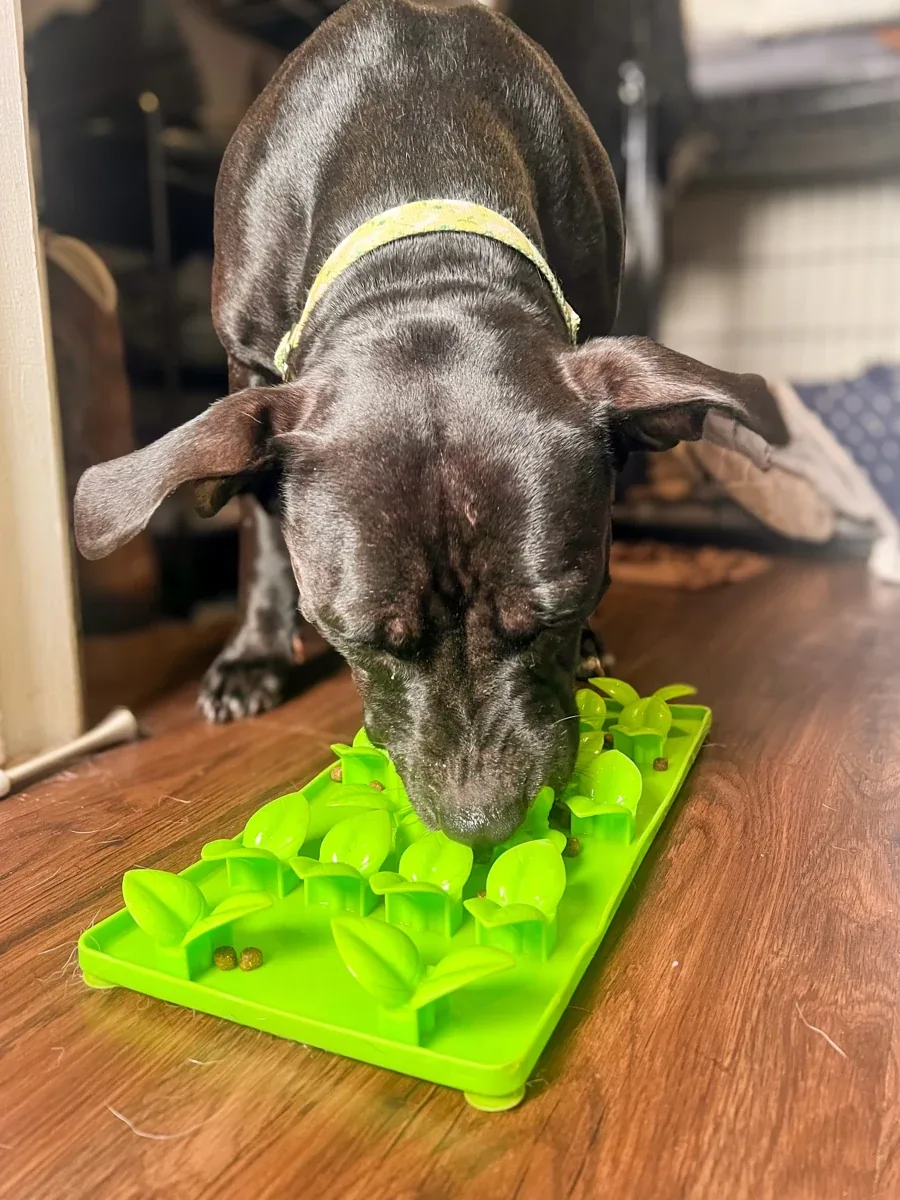
Enrichment is not a contest to keep your dog busy all day. It’s about offering suitable opportunities to explore, use their senses, play, and engage with their environment. What works for one dog may be too much, too little, or simply uninteresting for another.
Look at the whole day.
Notice when your dog has opportunities to move, investigate, and rest. A day can include an appropriate walk, a little training, a simple food activity, and quiet time. You don’t need to fill every moment. Choose activities with your dog’s age, physical needs, and safety in mind.
Make quiet time possible.
A comfortable place to rest and a predictable routine can be useful starting points. Notice what makes settling easier or harder for your dog. Avoid treating a single behavior as proof of how a dog feels; look at the situation and the pattern over time.
Try one small change.
Rather than adding five new activities, choose one suitable option and see how your dog responds. Supervise unfamiliar toys and food activities. If restlessness is new, severe, or accompanied by other changes, talk with your veterinarian instead of assuming your dog simply needs more exercise.